Whether you're choosing between solid and engineered, narrowing down a species, or figuring out which rooms hardwood works best in, here's what to know before you shop.
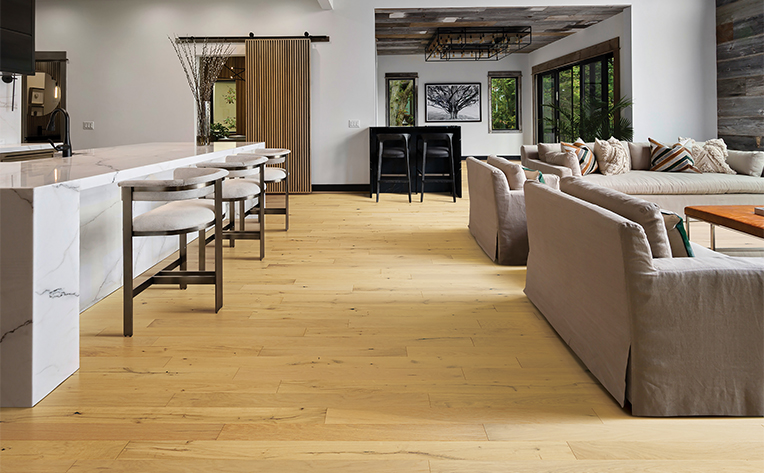
Hardwood flooring comes in so many varieties that the real challenge usually isn't deciding whether you want it, it's choosing the right construction type, species, finish, and thickness for your space. As your friendly flooring team, we're here to help you work through each decision so you can shop with confidence. Read on to explore everything you need to know before you pick out your new floors.
Hardwood flooring brings warmth and character to any room, along with lasting value. Its natural grain patterns and rich tones work in traditional and modern spaces alike, and it ages beautifully, developing depth and patina over time rather than simply wearing down.
Durability is one of hardwood's strongest qualities. It holds up well in busy households and cleans easily, making it a practical choice for families with kids or pets. When the surface starts to show wear, most solid hardwood floors can be sanded and refinished to look like new, adding years to the life of your floor.
Hardwood also adds appeal at resale. Many buyers see it as a premium feature, and its timeless look rarely feels dated.
The two main construction types are solid and engineered hardwood. Knowing the difference helps you choose the right floor for each room in your home.
Solid hardwood is milled from a single piece of wood throughout each plank. It can be refinished multiple times, which makes it a strong long-term investment. Because solid wood responds to changes in humidity, it performs best in above-grade spaces with stable moisture levels. Living rooms, dining rooms, and bedrooms are ideal spots.
Engineered hardwood flooring is built from multiple wood layers bonded in alternating directions, with a real hardwood veneer on top. This cross-ply construction resists the expansion and contraction that affects solid wood, making engineered a great fit for kitchens, basements, and areas with humidity variation. Most engineered options can be refinished at least once, and some waterproof engineered products are available for added protection.
For more on engineered hardwood construction and how it compares, see our complete guide.
Hardwood flooring comes in a range of styles that affect both the look and feel of a finished space. Beyond species and construction, the surface treatment and format you choose can dramatically change how a room reads.
Strip flooring features narrow boards typically ranging in width from 1.5 to 2.5 inches. This style creates a clean, traditional look, and its slim profile can help smaller rooms appear larger by drawing the eye along the length of the planks. It pairs well with both classic interiors and contemporary decor and is a smart choice for hallways, bedrooms, and any space where you want to maximize visual openness.
Plank flooring offers wider boards, usually between 3 and 8 inches, that bring a sense of rustic warmth to any room. It works beautifully in farmhouse, cottage, and heritage-style homes, and adds texture and flow to open-concept spaces. Plank flooring is available in a wide range of species, from rich walnut to classic oak, giving you flexibility to match your overall design direction.
Hand-scraped hardwood floors are finished with a textured surface that mimics the appearance of reclaimed or naturally aged wood. Each board carries its own unique markings, making the floor visually distinctive. Despite their old-world character, hand-scraped floors are finished with durable urethane coatings that hold up well in family homes and more formal spaces alike.
Wire-brushed floors offer a subtler take on texture. During manufacturing, the wood surface is lightly brushed to remove the soft grain, exposing a matte, slightly textured finish. The result adds depth without overwhelming a space, making it well suited to modern and transitional interiors. Like hand-scraped styles, wire-brushed floors benefit from advanced urethane finishes that resist everyday wear.
Hardwood species vary in color, grain, and hardness. All three affect how a floor looks and how well it holds up over time.
Oak: The most widely used hardwood species. It takes stain well, and its pronounced grain adds visual texture. Red oak runs warmer in tone, while white oak leans cooler and has become a popular choice in contemporary homes. Both work well in nearly any space.
Maple: Has a tighter, more uniform grain than oak, which gives it a cleaner, more contemporary look. It is one of the harder domestic species, making it a strong performer in high-traffic areas and households with active pets.
Hickory: Among the hardest domestic hardwoods available. Its dramatic grain variation and natural color contrast, ranging from pale cream to deep brown within a single plank, make it visually distinctive. It's an excellent choice for spaces that see heavy use or for homeowners who want a floor with real character. See hickory flooring pros and cons for a deeper look.
Walnut: Sits at the softer end of the domestic hardwood range but is prized for its deep, rich brown tones and smooth grain. It brings warmth and sophistication to living rooms and bedrooms, and its natural color means it often looks best with minimal staining.
Pine: One of the softer domestic species, pine has a distinctive knotty character and warm, honey-toned color that suits rustic and cottage-style interiors. It shows the marks of everyday life more readily than harder species, which many homeowners appreciate as part of its charm.
Ash: A hard, light-toned domestic species with a prominent grain similar to oak. Ash takes stain well and works in both traditional and contemporary interiors. It is a strong performer in active households and a great option for buyers who want oak's durability with a slightly different look.
Cherry: Starts light and deepens to a warm reddish-brown over time as it reacts to light. It is a softer species, better suited for lower-traffic spaces where its elegant appearance can be appreciated without heavy wear.
Color and finish have as much impact on how a floor looks as species does. The tone you choose sets the mood of a room, affects how much light it reflects, and influences how wear shows over time.
Light-toned floors in species like ash, maple, and white oak open up smaller spaces and complement coastal, contemporary, and Scandinavian-inspired interiors. Darker tones add drama and warmth, especially in larger rooms with good natural light. Not sure which direction fits your space? Our guide to light vs dark floors walks through the trade-offs in detail.
If you're drawn to rich, natural warmth, walnut, hickory, and pine are among the most popular choices for that look. See our roundup of warm toned hardwood options for inspiration and style ideas.
Beyond species and construction type, four specs have an outsized effect on how your floor looks and performs over time.
The Janka hardness rating measures how much force it takes to embed a steel ball into a wood surface. The higher the number, the harder the wood. This matters in everyday life: harder species resist dents and scratches better in high-traffic areas and homes with pets.
As a general reference, red oak rates around 1,290, maple around 1,450, and hickory around 1,820. Softer species like pine sit well below 1,000, and cherry comes in just under it, so both are better suited for lower-traffic spaces. If durability is a priority, hardness should be near the top of your checklist.
Narrow planks (roughly 2 to 3 inches) create a classic look and can help smaller rooms feel more open by drawing the eye along the length of the floor. Wide planks (5 inches and up) showcase the natural grain and character of the wood more prominently and tend to create a warmer, more relaxed feel. They work well in open-concept spaces and rooms where the floor itself is meant to make a statement. For more on how plank width shapes a room, see our guide to how plank width affects the look of a room.
How shiny your floor appears is determined by its gloss level, typically rated as matte (low), satin (medium), or gloss (high). Matte finishes help maintain a floor's appearance in high-traffic areas because they don't show everyday scuffs and smudges as readily. High-gloss finishes add elegance and formality but tend to show wear more visibly over time. Satin is the most common middle-ground choice for homes.
Prefinished hardwood flooring arrives from the factory with its finish already applied. It installs faster, is ready to use immediately, and typically carries a more durable factory finish than site-applied options. Unfinished hardwood is sanded and finished on-site after installation, which allows for a fully custom stain color and a seamless look across the floor. The trade-off is a longer installation process, since the finish is applied and cured right in your home. For most homeowners, prefinished is the more practical choice, while unfinished makes sense when a custom color match is a priority.
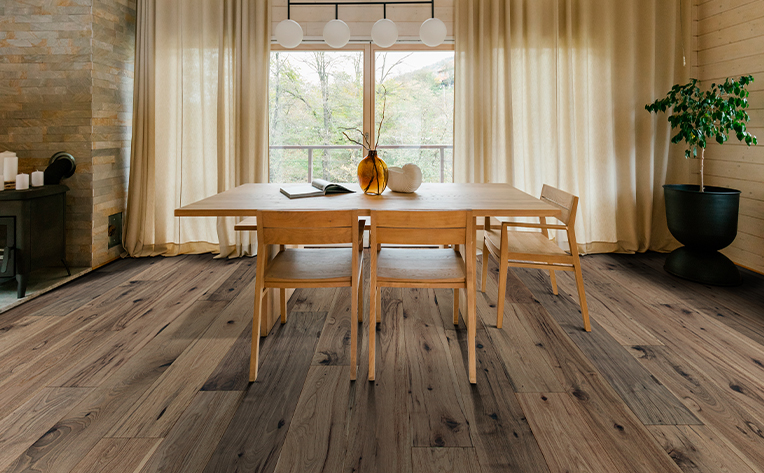
Hardwood is a versatile option, but construction type and species both matter when it comes to room suitability.
Solid hardwood works well in:
Engineered hardwood works well in:
Not recommended for either:
Once you've narrowed down the species, construction type, and finish that feel right for your home, the next step is easy. One of our friendly flooring experts will come to your home, measure your space, and walk through your options with you in person. Seeing samples in your own lighting, next to your furniture and wall colors, makes it much easier to feel confident in your choice. We'll answer your questions and talk through how each option fits your household and lifestyle. Schedule a free estimate today, and let's find the hardwood floor you'll love for years to come.
A few more ways to get started:
